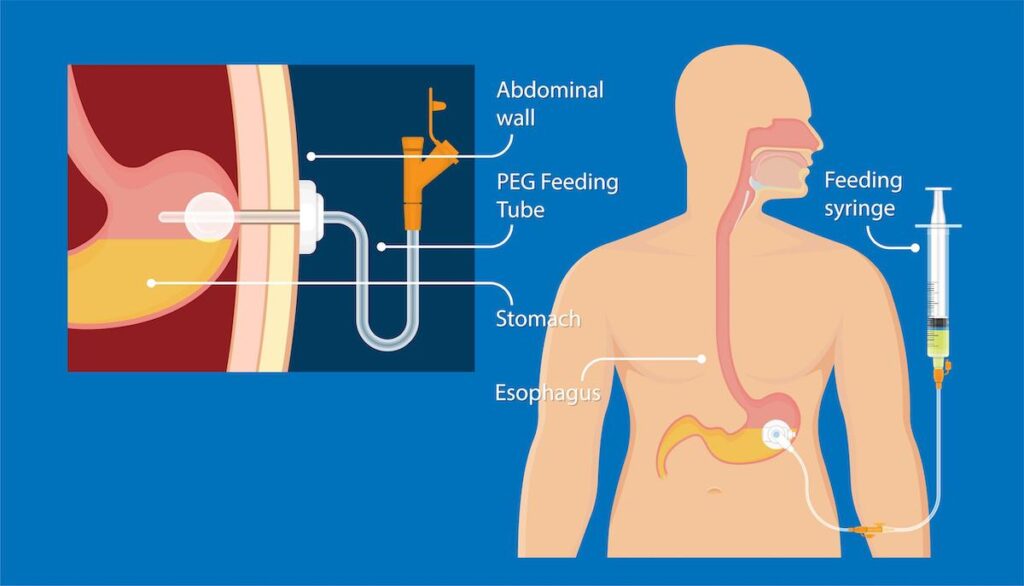
PEG feeding is a method of delivering nutrition directly into the stomach through a tube inserted via the abdominal wall. It is used when oral intake is unsafe or insufficient.
PEG feeding involves the use of a Percutaneous Endoscopic Gastrostomy (PEG) tube, a small, flexible tube inserted directly into the stomach through the abdominal wall using an endoscopic procedure.
This allows patients to receive liquid nutrition, fluids, and medications when they cannot eat or swallow safely due to medical conditions, such as a stroke, motor neurone disease, and head and neck cancers.
As the disease progresses, people with MND may experience difficulty with everyday activities such as walking, speaking, swallowing, and breathing. Although MND does not usually affect a person’s intelligence or senses, the physical impact can be life-changing, requiring increasing levels of care and support.
The PEG procedure is minimally invasive and is usually performed under mild sedation.
An endoscope is passed through the mouth into the stomach to guide the placement of the tube. A small incision is made in the abdominal wall, and the tube is inserted and secured with a fixation device to keep it in place.
The tube can remain in place for short-term or long-term use, sometimes lasting up to two years, and can be replaced or removed by trained healthcare professionals.
PEG tubes require regular care to prevent infection and blockage. This includes flushing the tube with water, cleaning the insertion site, and monitoring for signs of infection or irritation.
A “Y” adaptor or syringe can be used to administer feeds and medications. Patients and caregivers are usually trained in proper handling and feeding techniques.
While generally safe, PEG feeding can have complications such as infection, tube displacement, or blockage.
Patients are assessed individually to determine the safest method of nutrition, and antibiotics may be given to reduce the risk of infection during the procedure.
PEG feeding is a widely used and effective method to maintain nutrition in patients who cannot eat normally, supporting overall health and recovery while bypassing the need for oral intake.