
Motor neurone disease (MND) is a rare and progressive neurological condition that affects the nerves responsible for controlling voluntary muscle movement. These nerves, known as motor neurones, gradually stop working, leading to muscle weakness, stiffness, and wasting over time.
As the disease progresses, people with MND may experience difficulty with everyday activities such as walking, speaking, swallowing, and breathing. Although MND does not usually affect a person’s intelligence or senses, the physical impact can be life-changing, requiring increasing levels of care and support.
The exact cause of motor neurone disease is still unknown, and currently there is no cure. However, treatments, therapies, and supportive care can help manage symptoms, improve quality of life, and slow the progression of the disease for some individuals.
Living with MND can be challenging not only for those diagnosed but also for their families and caregivers. Raising awareness, funding research, and providing compassionate support are vital steps toward improving care and working toward future breakthroughs.
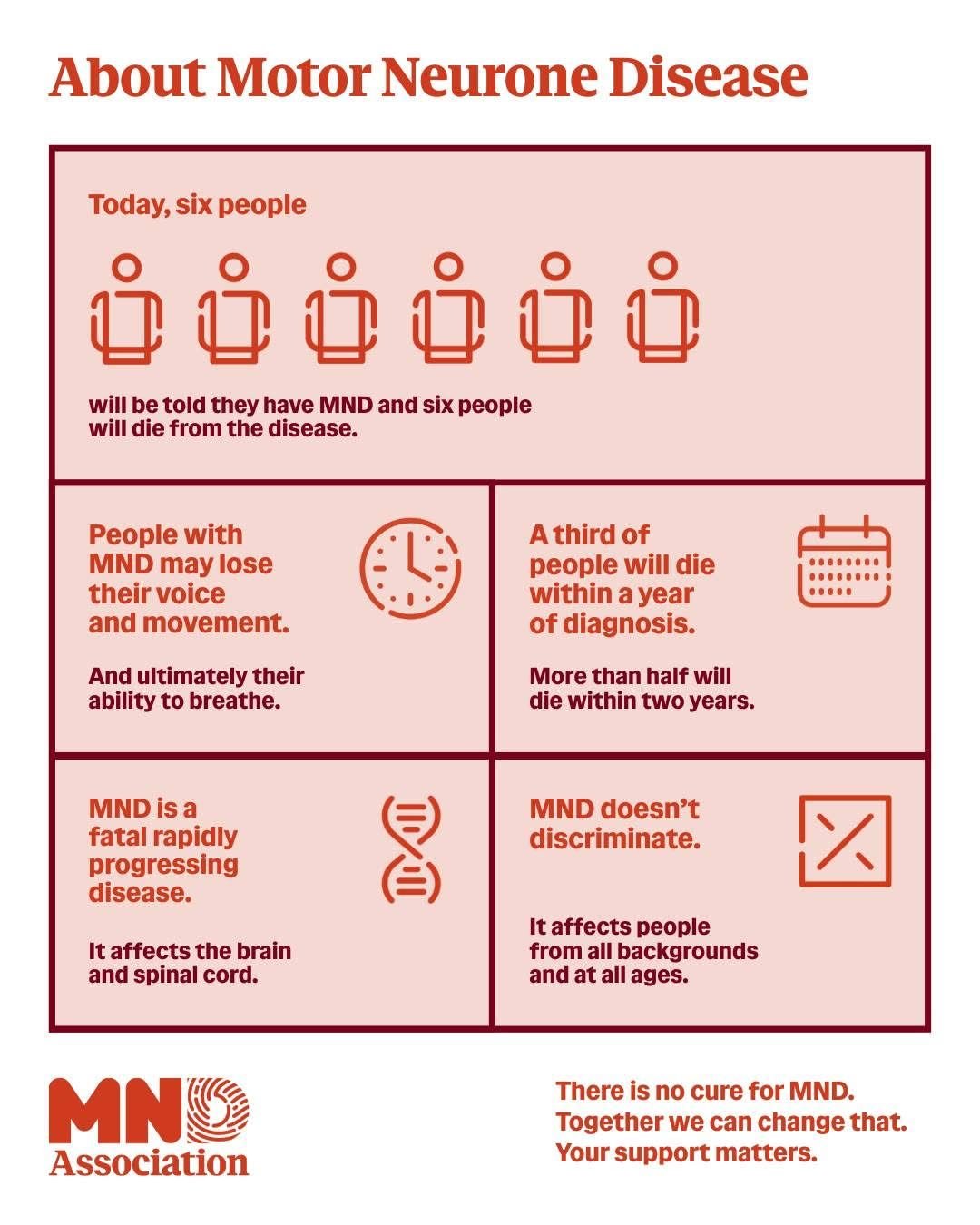
Motor Neurone Disease (MND) is a rare progressive neurological condition that damages the brain and nervous system.
MND is incurable and can substantially shorten life expectancy, but there are treatments which help the person to manage the symptoms and have the best quality of life possible.
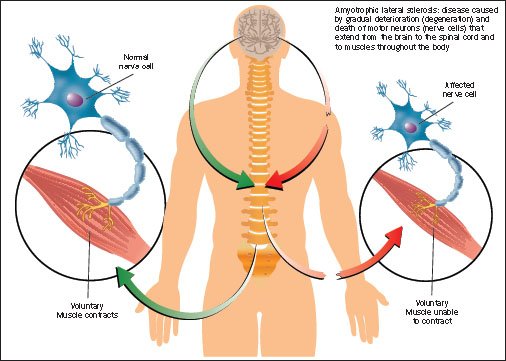
MND affects the motor neurones in the brain and spinal cord and this leads to muscle weakness and waste.
How people are affected by the disease is individual and not all symptoms will affect everyone which can progress at varying speeds.
ALS causes people to become increasingly disabled as messages from the motor neurone cells in the central nervous system gradually stop reaching the muscles, causing them to weaken. They may experience changes in their thinking and behaviour.
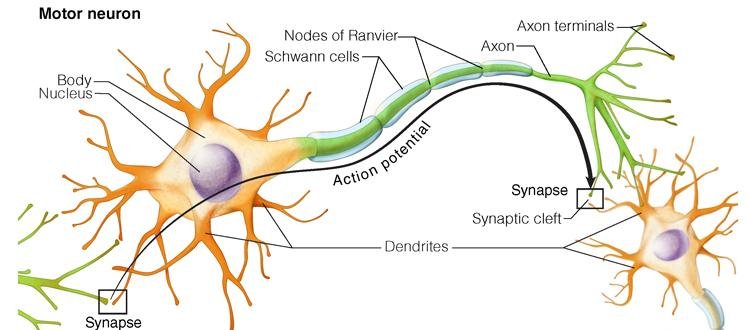
Motor neurones control muscle activity such as gripping, walking, speaking, swallowing and breathing and over time a person with MND will find it increasingly difficult to perform some or all of these tasks.
Motor Neurone Disease (MND) is an umbrella term for a group of related neurological conditions that progressively damage the motor neurones responsible for controlling voluntary muscle movement. Different forms of MND vary according to which motor neurones are affected and where symptoms first appear.
There are four main types of MND:
1. Amyotrophic Lateral Sclerosis (ALS)
ALS is the most common form of MND and affects both upper and lower motor neurones.
Primary symptoms:
Weakness and muscle wasting, often beginning in the arms or legs. Early signs may include a weakened grip, dropping objects or frequently tripping.
Clinical signs:
Muscle weakness and wasting may occur alongside twitching, muscle stiffness and overactive reflexes.
Progression:
Symptoms may begin in the limbs or other areas and gradually spread to additional muscle groups over time.
2. Progressive Bulbar Palsy (PBP)
PBP, also known as bulbar-onset MND, mainly affects the muscles of the face, throat and tongue.
Primary symptoms:
Early symptoms commonly include slurred speech (dysarthria) and difficulty swallowing (dysphagia).
Progression:
Symptoms begin in the bulbar muscles responsible for speaking and swallowing. Other areas of the body may become affected as the condition progresses.
3. Progressive Muscular Atrophy (PMA)
PMA is a rare form of MND that mainly affects the lower motor neurones.
Primary symptoms:
Symptoms may begin with weakness or clumsiness in the hands and can gradually spread to other parts of the body.
Clinical signs:
Muscle weakness, wasting and involuntary muscle twitching known as fasciculations may occur.
Progression:
PMA often progresses more slowly than ALS, although the rate of progression varies considerably between individuals.
4. Primary Lateral Sclerosis (PLS)
PLS is a rare form of MND that predominantly affects the upper motor neurones.
Primary symptoms:
Muscle weakness and stiffness, known as spasticity, commonly begin in the legs. Speech problems may also occur.
Clinical signs:
People may experience increased muscle tone, brisk reflexes, stiffness and problems with balance or mobility.
Progression:
PLS generally progresses very slowly. Because symptoms can overlap with other forms of MND, diagnosis may sometimes be reviewed or changed as symptoms develop
The most important component in the diagnosis of MND is taking a history from the patient and conducting a thorough neurological examination.
Blood Tests
Nerve Conduction Studies (NCS) and Electromyography (EMG)
Electromyography (EMG)
Electromyography, or EMG, involves inserting small needles, similar to acupuncture needles, into muscles in different parts of the body.
It is not dangerous and is very rarely painful.
Analysis of the electrical activity and activation of the muscles can identify changes consistent with MND.
Magnetic Resonance Scanning (MRI)
Lumbar Puncture
Based on the patient's history and examination, a lumbar puncture may be performed.
A lumbar puncture cannot diagnose MND but can look for evidence of other causes of the patient's symptoms.
This involves taking a sample of the cerebrospinal fluid (CSF) that surrounds the brain and spinal cord and acts as a shock absorber.
The procedure is usually performed by cleaning the lower back and making the area numb using a local anaesthetic.
A needle is then inserted into the space between the bones of the lower spine to obtain the CSF. The sample is then sent for analysis.
A blood test is required at the same time so that the CSF and blood can be compared.
MND is a progressive disease. Symptoms will get worse over time. People experience the symptoms on one side of the body first. MND is not a painful condition but can be uncomfortable due to muscle stiffness, also will experience reduce mobility. There are several symptoms – not everyone will experience all of them in the same order. Speed of progression can also vary.
Early Symptoms of MND
Weak grip, resulting in difficulty to pick up or hold objects
Difficulty to lift the arm
Weakness in ankle or leg
Dragging the leg
Muscle cramps and twitches
Stiff joints
Slurred speech
Saliva becomes thick and sticky
Inappropriate emotional responses for example laughing when feeling sad
— OVER TIME THE SYMPTOMS WORSEN AND BECOME DEBILITATING
LATER-STAGE SYMPTOMS INABILITY TO MOVE SEVERE DIFFICULTY BREATHING SWALLOWING COMMUNICATING
The later stages a person with MND may need a feeding tube or help to breathe through a face mask
Some people will also develop frontotemporal dementia which causes brain cells in the frontal or temporal lobes to die and the brain cannot function normally. It can affect personality and behaviours – and may lose their ability to speak
For many people with MND, genetics play at least some role in their susceptibility to the disease. This varies significantly between individuals.
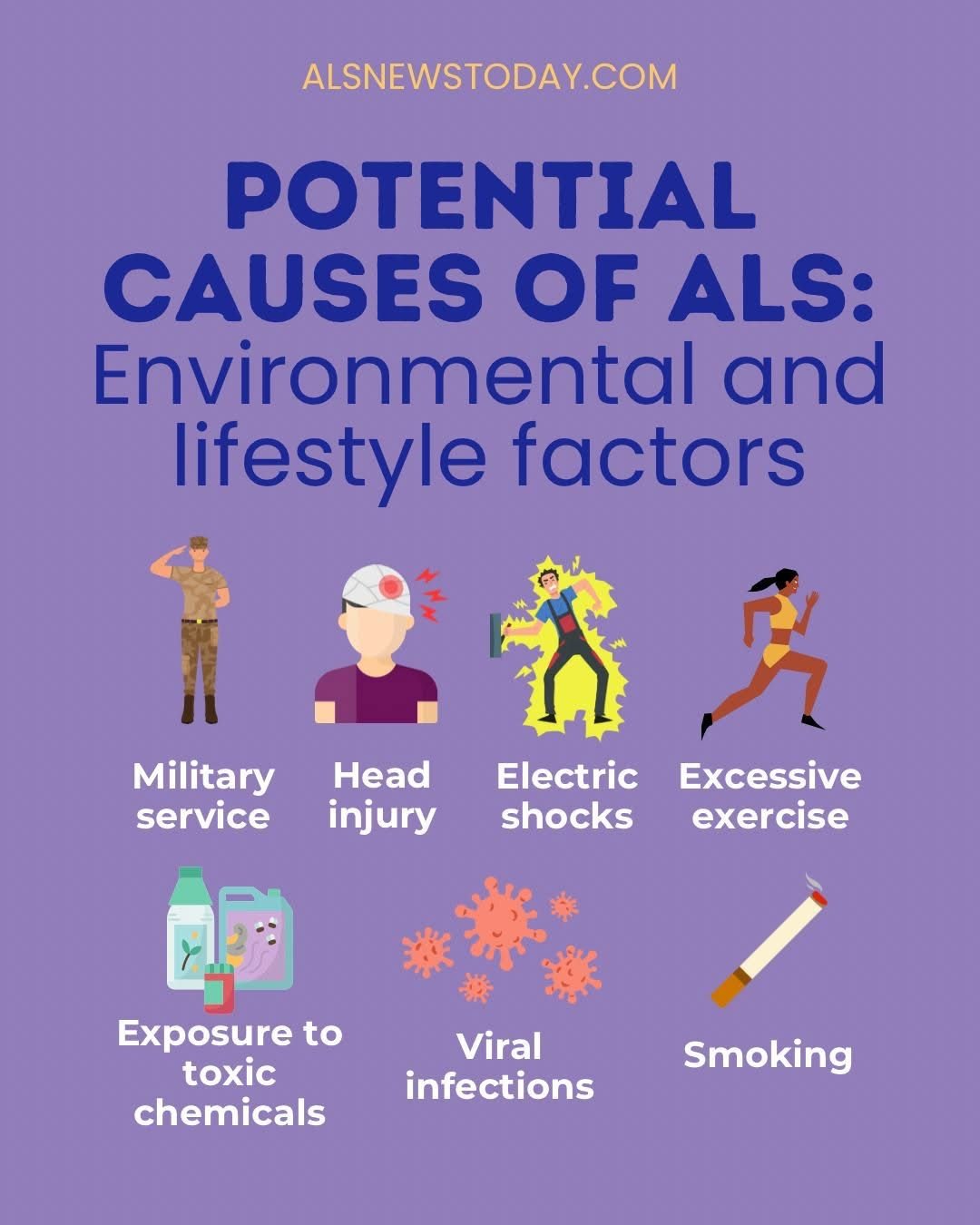
Most cases occur without a direct genetic cause. Research is therefore also focused on environmental and occupational factors.
Air Pollution:
Research has identified a link between long-term exposure to fine particulate matter and an increased risk of MND. These tiny particles can enter the nervous system, potentially causing inflammation and oxidative stress that damages motor neurones.
Heavy Metals:
Lead, mercury and arsenic are known neurotoxins. Long-term exposure through industrial work or contaminated water may impair cell function.
Agricultural Chemicals:
A higher incidence of MND has been observed among people working in farming, with exposure to specific pesticides or herbicides being investigated as a possible factor.
Blue-Green Algae:
A toxin called BMAA, produced by certain algae, is being studied for its ability to create faulty proteins within human cells.
Strenuous Exercise:
Extremely high levels of intense, anaerobic activity may be a risk factor.
Mechanical Trauma:
Head injuries or significant physical trauma, including injuries during contact sports such as football and rugby, are suspected of triggering neuroinflammation.
Military Service:
Veterans appear to have a slightly higher risk of developing MND. Possible factors include exposure to hazardous chemicals, intense physical training, or the physiological stress of deployment.
The way motor neurones die follows a similar biological pathway.
Glutamate Toxicity:
Glutamate is a chemical messenger that carries signals between nerve cells. If levels become too high, it can become toxic, overstimulating the neurones until they are damaged.
Protein Clumping:
In almost all cases of MND, abnormal clumps of a protein called TDP-43 are found inside affected motor neurones. These aggregates disrupt the cell’s internal transport systems, eventually leading to cell death.
Oxidative Stress and Mitochondria:
Mitochondria are the powerhouse of our cells. In MND, these cellular batteries appear to fail, and the cell becomes unable to clear toxic waste products known as free radicals. This build-up, known as oxidative stress, essentially poisons the cell from the inside out.
MND is a complex condition involving a combination of genetic vulnerability, environmental exposure, and lifestyle factors.
Riluzole
Riluzole is a neuroprotective medication that slows the progression of ALS by modulating neuronal activity and protecting motor neurones from damage.
Riluzole works by reducing the release of glutamate from neurones, which helps protect motor neurones from excitotoxicity — a process in which excessive glutamate causes nerve cell damage and death.
It also blocks certain sodium channels associated with damaged neurones.
You will not see an improvement in your symptoms.
However the rate of deterioration may be slower if you take Riluzole. It is best to start taking it as early as possible after diagnosis.
The effectiveness of Riluzole can vary from one person to another.
Patients taking Riluzole may be 2 to 19 months longer
you may not be able to tell if it is working — if it does not have a noticeable effect of MND
Riluzole will slow down the progression over a period of time —
Comes in tablet or liquid form
The recommended dose is 50mg twice a day.
It is advised to be taken on an empty stomach to reduce the risk of side effects.
If you take the liquid form — they may be a temporary numbness of the tongue and mouth.
You need to check with your doctor, dentist or pharmacist
before taking any new medications.
As Riluzole is a specialised drug — MND normally provide it on a 1 to 2 monthly basis.
The MND Care Centre supply the first 12 months of riluzole near your G.P will take over.
More information:
www.nhsdirect.nhs.uk
www.patient.co.uk
www.mndassociation.org.
Baclofen
Baclofen is used to treat pain and certain types of spasticity, including muscle stiffness and tightness.
Baclofen belongs to a class of medications called skeletal muscle relaxants. It acts on the spinal cord nerves and decreases the number and severity of muscle spasms caused by ALS.
It can also help relieve pain and improve muscle movement.
Baclofen is available in tablet or liquid form.
It Focuses on maintaining movement and function through exercise manual therapy, education and advice. Physiotherapy Can not ~~reserve~~ ~~lese~~ reverse the effects of MND it can help maintain range of movement and comfort for long as possible.
Maintaining Strength in unaffected muscles! Exercise can help keep weakened muscles strong and compensate for ~~longer~~ muscles no longer working properly.
Preventing Stiffness in joints: physical exercise can help maintain flexibility in affected muscles and prevent stiffness in joints.
Managing breathing difficulties: assist in clearing the chest and maintaining lung capacity.
Assisted or passive exercise: ~~impaired~~ if impaired movement makes exercise difficult a physiotherapist can advise on assisted or passive exercise to maintain flexibility and range in the joints. Gentle exercise, such as hydrotherapy or swimming can be beneficial.
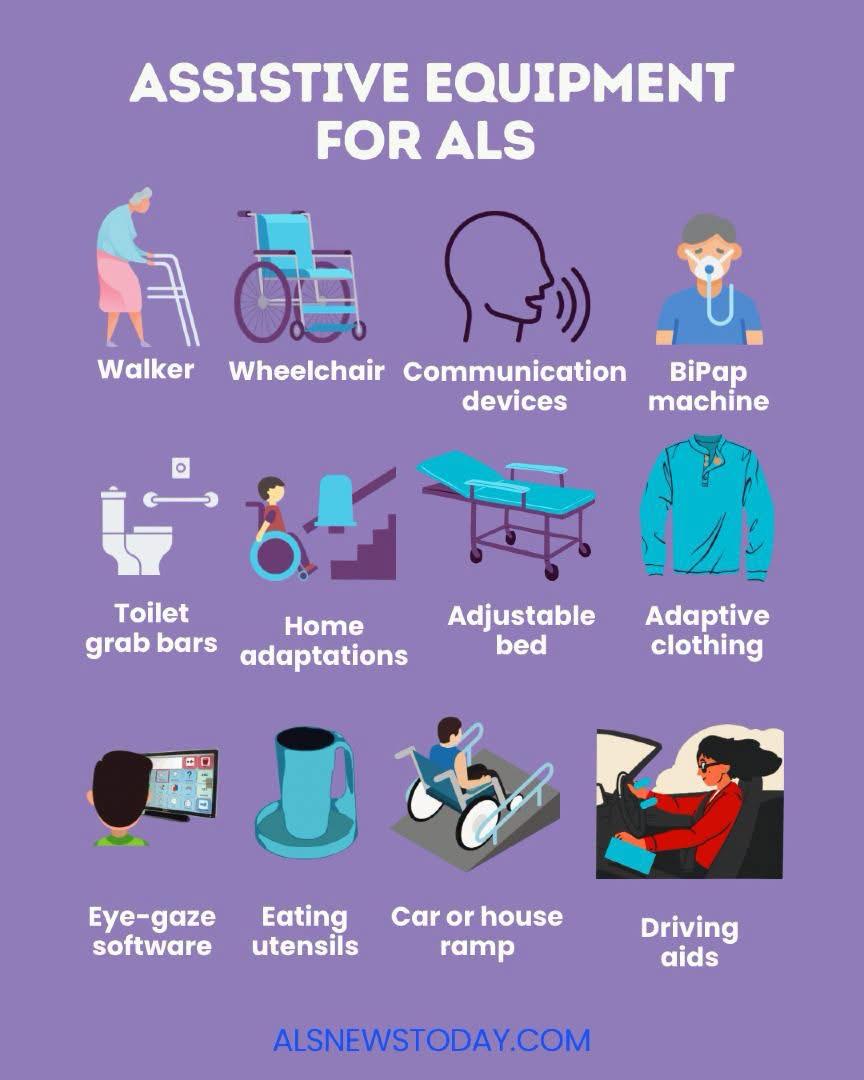
Occupational therapy helps people with MND maintain independence, manage daily activities and improve quality of life through personalized interventions, adaptive equipment and home modifications.
They support individuals with MND by helping them to continue meaningful activities and maintain independence as the disease progresses.
Adaptive equipment and home modifications – Wheelchairs, ~~ent~~ environmental controls, grab rails, ramp, and mobility aids.
OT will give techniques to prevent discomfort, maintain ~~Mobility~~ mobility and reduce fatigue.
They will offer psychological and cognitive support with guidance for coping with emotional changes, planning ahead and maintaining social engagement.
Support for ~~families~~ families and caregivers – Managing care responsibilities while maintaining quality of life for the person with MND.
It is important that a early referral to occupational therapy is ~~Crucial~~ Crucial. Interventions, ~~ex~~ such as equipment and home adaptations can take weeks or months and timely support ensures that individuals can continue engaging in meaningful activities before functional decline become severe.
Making a real difference in the lives of people living with Motor Neurone Disease through support, care, and research.
Bringing together individuals, families, and communities affected by Motor Neurone Disease to share strength, understanding, and hope
Taking meaningful action to raise awareness of Motor Neurone Disease and help drive progress toward better treatments and a future cure.
‘Healthy fats’ could protect against motor neurone disease
25 February 2025
Enhancing levels of ‘healthy fats’ like omega-3s in the brain could be beneficial in motor neurone disease (MND) finds a new study in fruit flies and brain cells, led by UCL researchers.
Previous epidemiological studies have linked high dietary levels of omega-3 fatty acids – like those found in oily fish, nuts and seeds – with a lower risk of developing MND, and longer survival in people affected by the disease. But until now, it was not well understood why this occurs.
A new study, published in Nature Neuroscience and led by researchers at the UK Dementia Research Institute (UK DRI) at UCL, and the UCL Institute of Healthy Ageing, found that increasing the levels of these healthy fats in the brain cells of fruit flies carrying a gene mutation called C9orf72, saw a ‘dramatic’ increase in their survival.
The C9orf72 mutation is the most common genetic cause of MND and a rare form of dementia, known as frontotemporal dementia (FTD). Cells were also collected from people with these conditions and converted into brain cells in the lab. Healthy fats also increased the survival of these MND/FTD brain cells.
The researchers believe that the findings unlock a new understanding of the mechanisms underlying MND and FTD.
Study leader Professor Adrian Isaacs (UCL Queen Square Institute of Neurology and UK Dementia Research Institute at UCL) said: “Epidemiological studies suggest that people with a high intake of omega-3 fatty acids have a lower risk of developing motor neuron disease. Our study adds a deeper understanding of the mechanisms behind this.
“From our findings we can conclude that enhancing levels of omega-3 fatty acids in the brain may be beneficial in motor neuron disease. Of course, the next step is to test this in people. We first need to work out which specific fatty acid would be best to test in humans, and how we can deliver sufficient quantities to the brain. Then, we want to take these findings forward into a clinical trial.”

MND, including its most common subtype amyotrophic lateral sclerosis (ALS), causes progressive muscle weakness due to the degeneration of motor neurons in the brain and spinal cord. It is estimated to affect 1 in 300 people in their lifetime, and there are currently no disease-modifying drugs available to treat the condition.
In the new study, researchers measured levels of different types of fats in human brain cells and in flies carrying the C9orf72 gene mutation. They found that the levels of poly-unsaturated fatty acids, including omega-3 fatty acids, were significantly reduced in the MND/FTD flies compared with a control. These fatty acids were also reduced in brain cells from people with MND/FTD.
There are two essential fatty acids that must be consumed in food, as the human body cannot produce them. They are alpha linoleic acid, a type of omega-3 fatty acid found in flaxseed, soybean and vegetable oils such as canola oil, and linoleic acid, a type of omega-6 fatty acid, found in similar foods.
The scientists first fed the flies linoleic acid and alpha linoleic acid, to test whether this would impact on their survival. They found that the amount of fatty acids in their diet led to a small improvement in the survival of the flies.
Next, they delivered the fatty acids directly to the brain cells of the flies by expressing the genes capable of producing them. They found that this increased the survival of the flies by 83%, from 15 days to 27.5 days.
They repeated the experiment in cells taken from people with MND/FTD and found that increasing levels of the fatty acids in the cells prolonged survival by 30%.
Professor Martin Giera, Head of Metabolomics Group at Leiden University Medical Center (LUMC), said: “Our study highlights the crucial role of lipids and their precisely regulated composition in health and disease. Importantly, our findings reveal that addressing these issues is not merely about providing the right components but involves carefully modulating endogenous lipid levels in specific locations.”
“In summary, we establish a foundation for developing potential future therapies that leverage lipid metabolism – a concept with far-reaching implications beyond ALS, extending to a range of neurodegenerative diseases.”
The study was funded by Alzheimer’s Research UK and the UK DRI.
Dr Julia Dudley, Head of Research at Alzheimer’s Research UK said: “With nearly one million people living with dementia in the UK, there is an urgent need to understand and treat the diseases that cause this condition, including rarer forms. Neurodegenerative diseases are complex, however some share similar genetic changes. This means that understanding how these changes affect the brain could ultimately lead to new treatment approaches for dementia.”
“It is exciting to see findings which suggest that increasing levels of fatty acids, including omega-3 could be protective against motor neuron disease and frontotemporal dementia.”
“At Alzheimer’s Research UK, we are proud to support research that helps to broaden our understanding of rare forms of dementia and foster collaborations in dementia research across the UK. We are excited to see the next steps for this research which we hope will play a key role in bringing us closer to a cure.”
Lorem ipsum dolor sit amet, consectetur adipiscing elit. Nullam sed velit vel orci interdum dignissim.
Lorem ipsum dolor sit amet, consectetur adipiscing elit. Nullam sed velit vel orci interdum dignissim.
Lorem ipsum dolor sit amet, consectetur adipiscing elit. Nullam sed velit vel orci interdum dignissim.
Lorem ipsum dolor sit amet, consectetur adipiscing elit. Nullam sed velit vel orci interdum dignissim.
Lorem ipsum dolor sit amet, consectetur adipiscing elit. Nullam sed velit vel orci interdum dignissim.
Lorem ipsum dolor sit amet, consectetur adipiscing elit. Nullam sed velit vel orci interdum dignissim.